Updated: July 2026
Komodo Park Regulations 2027: A Guide for Yacht Enthusiasts
Komodo Park Regulations 2027 place a strong emphasis on sustainable tourism, requiring visitors to adhere to newly implemented environmental guidelines and visitor limitations.
Understanding Komodo Park Regulations 2027
As one of Indonesia’s most valued natural reserves, Komodo National Park is introducing new regulations in 2027 to enhance conservation efforts. The primary aim of these regulations is to balance tourism with preservation. The ‘Komodo park regulations 2027’ now mandate stricter controls on visitor numbers, waste management, and wildlife interaction, ensuring the park’s unique ecosystem remains protected. These regulations are crucial for maintaining the habitat of the Komodo dragon and other endemic species, as well as preserving the park’s diverse marine life.
The park spans over 1,733 square kilometres, encompassing both land and marine areas. It is home to approximately 5,700 Komodo dragons, which are the park’s most famous inhabitants. The regulations are designed to ensure that the population of these iconic creatures remains stable and that their habitat is not disturbed by increasing tourist activities.
Essential Komodo National Park Rules
Visitors to Komodo National Park in 2027 will need to adhere to a set of updated rules. These rules are designed to protect the park’s delicate environment and its renowned Komodo dragons. Key rules include:
- Strict limits on the number of visitors per day to prevent overcrowding and reduce environmental impact. The park authorities have set a cap of 2,000 visitors per day, a significant reduction from previous years, to ensure a more controlled and less intrusive tourism experience.
- Mandatory use of certified guides for all tours within the park to ensure safe and educational experiences. Guides are trained to provide information on the park’s history, wildlife, and conservation efforts, enhancing the visitor experience while ensuring safety and compliance with park rules.
- Prohibition of single-use plastics to minimise waste and protect marine life. Visitors are encouraged to bring reusable water bottles and bags. This measure aims to significantly reduce the plastic waste that has historically threatened the park’s terrestrial and marine ecosystems.
- Designated areas for diving and snorkeling to prevent habitat disruption. With over 1,000 species of fish and 260 species of reef-building coral, the park’s marine biodiversity is a key focus of conservation efforts. Diving and snorkeling activities are restricted to certain zones to minimise human impact on these delicate ecosystems.
- Compliance with all wildlife interaction guidelines to prevent stress on native species. These guidelines include maintaining a minimum distance of 10 metres from wildlife, particularly the Komodo dragons, to ensure both visitor safety and animal welfare.
2027 Komodo Park Policies for Yacht Charter
For those interested in exploring Komodo via private yacht, the 2027 Komodo park policies stipulate specific guidelines. Yacht charters must adhere to designated anchoring zones to protect coral reefs. The designated zones are carefully chosen to avoid damage to sensitive marine habitats. Additionally, all vessels are required to carry onboard waste disposal systems. These systems must be capable of handling all waste generated during a trip, ensuring no waste is discharged into the park’s waters. These measures are part of a broader initiative to promote sustainable marine tourism, which includes the use of eco-friendly fuels and the implementation of noise-reduction technologies to minimise disturbances to marine wildlife.
Planning Your Visit: What to Expect in 2027
Planning a yacht charter to Komodo National Park in 2027 requires careful consideration of the park’s regulations. Booking in advance is essential due to the daily visitor cap. Yacht operators are encouraged to provide eco-friendly options and educate guests on the importance of conservation. Many operators now offer packages that include carbon offset contributions, ensuring that their tours have a minimal environmental impact. For a comprehensive overview of planning a yacht charter, visit our FAQ page.
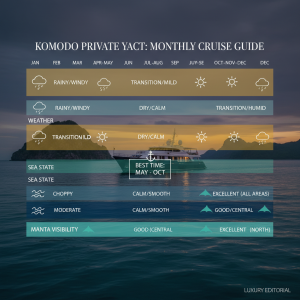
Visitors should also be prepared for variable weather conditions. The park’s dry season runs from April to November, offering the best conditions for sailing and wildlife viewing. The wet season, from December to March, sees heavier rainfall and rougher seas, which can affect travel plans.
2027 Note: Commitment to Sustainability
As Komodo National Park continues to adapt to the growing challenges of climate change and tourism, 2027 marks a pivotal year in its commitment to sustainability. These regulations underscore the importance of protecting the park’s biodiversity while ensuring that visitors can continue to enjoy its natural beauty. The park’s management is investing in research to monitor the health of both terrestrial and marine environments, ensuring that conservation strategies remain effective. Learn more about our sustainable practices on our main page.
FAQ
What are the latest regulations for visiting Komodo National Park in 2027?
The latest regulations include stricter visitor limits, mandatory guide usage, a ban on single-use plastics, designated diving areas, and specific wildlife interaction guidelines. These measures are designed to minimise human impact and ensure the preservation of the park’s unique ecosystems.
How does the 2027 policy affect yacht charters?
Yacht charters must adhere to new anchoring rules, carry onboard waste disposal systems, and operate within designated zones to protect the marine environment. These policies aim to reduce the ecological footprint of marine tourism and preserve the park’s aquatic biodiversity.
Are there any specific rules for interacting with Komodo dragons?
Yes, all interactions with Komodo dragons must occur under the supervision of a certified guide, and maintaining a safe distance is required to ensure both visitor safety and animal welfare. These guidelines are in place to prevent accidents and ensure that the natural behaviour of the dragons is not disrupted by human presence.